 English
 Français
With SEO
(Search Engine Optimization)
Search engine optimization (SEO) encompasses all the strategies implemented to help your website rank among the top results on search engines. SEO is not an exact science, but rather a set of actions to be implemented to convince Google, as well as Bing and Yahoo, of your website’s relevance and clarity. The more search engines consider your website to meet users’ needs and establish itself as an authority in a particular field, the higher they will rank it.
Why has SEO become essential?
There are now more than a billion websites, and Google has indexed 130 trillion pages.

Amid this sea of data, the top three organic search results alone account for 60% of traffic. Ninety percent of the traffic generated is concentrated on the first page of search results.
In other words: if, for search queries related to your business, your website ranks at the very bottom of the first page of results or on subsequent pages, you have no chance of being discovered by internet users. You may have a beautiful website and high-quality products or services, but if you neglect SEO, you won’t get any traffic, any leads, and therefore any customers.
Our SEO strategies to optimize your website's search engine rankings.
There are two main categories of actions to take when it comes to SEO: strategies known as “ on-site ", which includes actions carried out directly on the website, and the " off-site ", namely actions carried out off-site.
Analysis of the semantic cocoon
-
Reflection
Choose the key pages and build around them: content, navigation, media, and social media.
-
Production
Create relevant and comprehensive content with a single goal in mind: to satisfy the user.
-
Special Offer
Passing on the popularity of external sites (e.g., media sites) to our site: a backlink strategy.
Boost the EAT (Expertise, Authoritativeness, Trustworthiness)
-
Expertise
Provide relevant content and demonstrate expertise in the subject matter.
-
Authoritativeness
Demonstrate a website’s popularity through backlinks and its authors.
-
Trustworthiness
Strictly adhere to technical standards to demonstrate the site’s reliability to its users.
Page Content Optimization
To rank well in search engine results pages (SERPs), a page must be optimized for the following factors: keyword density, prominence, frequency, placement, co-occurrence, and contextual navigation.

Time
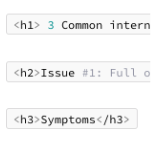
Headers
Main content
Creating multi-format pages
It is important to vary page layouts and create a wide range of ways to display content.
Create landing pages
with layouts
Embed video
& motion design
Create infographics
Goal : Use a wider variety of formats and media on your pages to generate more “top stories.”
Study of the PAA
(People Also Ask)'
Known as "People Also Ask," users' search queries are a key consideration when deciding how to write a page.
Our tools allow us to know what internet users are searching for.
Synergy between SEA and SEO
Data exchange with SEA is a key factor. SEA data allows us to track actual click volumes for specific keywords. We then optimize a page for organic search to:
- niche markets with low competition but high volume
- concurrent requests
- costly trademark applications
Structured datas
We need to do everything we can to help Google understand our content. It’s essential to use structured data (or snippets). JSON-LD code.